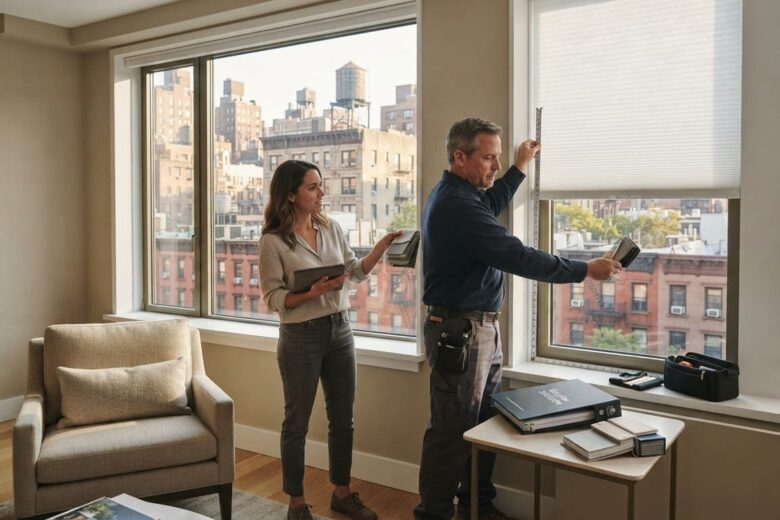
New York windows rarely follow the tidy dimensions that product catalogs assume. A prewar apartment on the Upper West Side may have 40-inch-deep sills, a casement that opens over a radiator, and a frame that has settled a quarter inch out of square over the past century. A Brooklyn brownstone may face a brick wall across a narrow courtyard, while a high-floor unit in Long Island City gets full afternoon sun and no privacy concerns at all. These conditions shape which window treatment will fit, function, and last, and they explain why many disappointing installations trace back to decisions made before the first product was ordered.
Selecting a Blinds company New York is only the first step. Homeowners and renters also need to understand how measurement, room function, motorization, and installation practices affect the final result. Window coverings in New York face a combination of tight floor plans, older masonry, humid summers, cold winters, and in many buildings, board or co-op rules about exterior appearance. Each of those factors narrows the options in a different way.
Working with a provider such as The Blinds Source can help with product selection and fabrication, but the most useful preparation happens at home. Taking careful measurements, understanding what each room needs, and asking the right questions before ordering will prevent most of the problems that surface after installation.
Measuring Before Anything Else
Measurement determines whether a treatment operates smoothly, blocks the light it was chosen for, and avoids damage to the frame or trim. Most fit and performance problems start with a dimension recorded incorrectly or not at all.
The first decision is mount type. An inside mount sits within the window recess, which gives a clean profile and keeps the treatment flush with the frame. It requires enough depth to clear the hardware and the operating mechanism, commonly about two inches or more depending on the product. Inside mounts show light gaps at the sides if the frame is out of square, and they leave less room for stacking. An outside mount attaches to the wall or trim above and beyond the opening. It can cover uneven frames, hide a deep sill’s imperfections, and block more light, but it extends beyond the window and may conflict with radiators, moldings, or decorative casings.
Prewar buildings often have out-of-square openings, so measure width and height at three points each: top, middle, and bottom for height; left, center, and right for width. Record depth at the top and bottom of the recess as well. For an inside mount, the smallest width and height govern the fit, because the product must clear the tightest point. For an outside mount, the largest dimensions usually matter, plus any overlap the manufacturer specifies.
Obstacles should be recorded separately. Note radiator covers and their projection, window cranks, sash locks, and any trim that could interfere with a stacked shade or a drapery rod. A casement window that swings inward needs clearance for the sash. A window with a deep, uneven sill may need a valance or a bracket adjusted to clear the trim.
Recording Measurements for Irregular Openings
Arches, angled ceilings, and bay windows are where standard measuring fails. For an arched top, measure the straight-sided portion and the height of the curve at its apex, and sketch the shape with dimensions. For a bay, measure each panel separately, along with the angles between them and the sill depth at each joint. Angled ceilings require measurement along the slope, not just the vertical height, and it helps to note the angle itself.
Identify which dimension governs the fit by checking the tightest constraint first. If a window is 35 inches wide at the top and 34 1/4 inches at the bottom, a 34 1/4-inch inside-mount product is the only safe choice. Record readings in fractions of an inch, and write the date and room name on each sketch so that multiple windows do not get confused.
A template or in-person verification is more reliable than self-measurement in several situations: non-rectangular shapes such as eyebrows and trapezoids, bays with compound angles, large or heavy custom drapery, motorized units that require exact mounting for drive mechanisms, and any window where the frame is visibly racked. A professional measurer can also detect problems such as a frame that bows inward at the center, which would cause a rigid blind to bind.
Matching the Treatment to Each Room’s Job
Choosing by product name leads to mismatched purchases. Choosing by what a room needs leads to better outcomes. Light control, privacy, insulation, and visual style each point toward different materials and constructions.
Roller shades block light cleanly and offer a simple profile. Blackout versions with a dual-layer or opaque backing stop nearly all light transmission. Cellular, or honeycomb, shades trap air in their cells, which improves thermal performance; they are a common choice for drafty prewar windows, though they are not a substitute for weatherstripping. Horizontal blinds, including aluminum and faux wood, allow adjustable light and view control through slat angle. Shutters provide durable, insulating coverage and hold their position well, but they are typically more expensive and require sufficient depth. Drapery offers the greatest style range and acoustic benefit, though it takes more floor and wall space.
For living areas where daylight matters but exposure is a concern, sheer and layered systems work well. A sheer shade filters light while obscuring the interior from the street during the day. Layering a sheer behind a light-blocking drapery or shade gives privacy at night and flexibility during the day. Sheer systems such as sheer-and-shade combinations usually cost more per window and need careful alignment to avoid visible gaps.
Specialty shapes, including arches, circles, quarter-rounds, and angled bays, require custom fabrication. Operation is often limited: a circular shade may be fixed, and angled windows may need a tilt-only mechanism. Lead times lengthen and costs can run well above standard rectangular products.
Bedrooms, Kitchens, and Bathrooms
Each room places different demands on a treatment. Bedrooms are the most demanding for light control. Blackout roller shades or blackout drapery with a lining deliver near-total darkness, which matters for shift workers and anyone in a street-facing apartment with early morning sun. Look for light-blocking edge channels or side tracks, since light leaks at the sides can undermine an otherwise opaque product.
Bathrooms require moisture tolerance. Real wood and some fabrics warp, swell, or develop mildew in high humidity. Aluminum, vinyl, and moisture-resistant faux wood hold up better. Fabric shades should be avoided near showers and tubs unless they are specifically rated for humidity. Ventilation matters as much as material choice; a poorly vented bathroom will degrade even resistant products over time.
Kitchens need cleaning access and grease resistance. Cooking releases oil particles that bond to fabric and wood surfaces, making them difficult to clean and prone to discoloration. Smooth aluminum or vinyl blinds can be wiped down, while fabric treatments near a range should be avoided or placed well away from heat and grease. Mount treatments far enough from the cooktop that heat does not damage the mechanism, and keep operating cords or wands accessible without touching cooking surfaces.
Motorization, Controls, and Long-Term Care
The decisions that matter most often come after installation. Motorization, electrical planning, and maintenance determine whether a treatment remains functional for a decade or fails within a few years.
Motorization is worth the added cost in several situations. Large or heavy treatments, windows above reach height or in stairwells, and rooms used daily, such as living rooms with multiple windows, benefit most. Motorized systems also offer scheduling and integration with smart-home platforms. Costs vary considerably by product and control type; battery-powered motors typically add roughly $150 to $400 per window, while hardwired or hub-based systems with multiple zones can run higher. Battery units are simpler to retrofit, but they need periodic recharging or battery replacement.
Wiring and power requirements are critical in older buildings. Low-voltage systems, usually Class 2 circuits under the National Electrical Code, can power many motors without new branch circuits. Line-voltage motors require a dedicated circuit and a licensed electrician. In New York City, electrical work requiring a permit must be performed by a licensed master electrician. Plaster walls, pre-existing cable runs, and limited access inside older window pockets often make retrofits difficult. Confirm before ordering whether the window has a usable power source within reach of the motor.
Cord safety is another consideration. Operating cords on corded blinds and shades pose strangulation hazards to young children. The Window Covering Manufacturers Association (WCMA) and its safety standard, ANSI/WCMA A100.1, guide cordless and cord-safe designs. Families with young children should choose cordless operation or cord-free motorized options.
Routine Cleaning and Maintenance
Cleaning depends on the material. Vacuum fabric shades and drapery with an upholstery brush at a low setting, and spot-clean according to the manufacturer’s care label. Wipe aluminum and vinyl blinds with a damp microfiber cloth and mild detergent, and dry them immediately to prevent water spots. Faux wood should be dusted regularly and wiped gently; avoid soaking the slats. Real wood needs dusting and occasional polishing, and it should be kept out of high-humidity areas.
Signs that a unit needs repair include slats or fabric that do not hang level, a lift cord that slips or fails to hold position, motors that stall or run intermittently, and visible gaps where a shade no longer sits in its tracks. Repeated clicking, jerky movement, or a cord that feels slack after adjustment often indicate worn components. Address these early to prevent further damage.
Realistic lifespan depends on the product and conditions. Basic aluminum blinds can last ten years or more in stable conditions. Roller shades and cellular shades typically last around five to ten years, with direct sun and frequent operation shortening that range. Motorized units depend on motor quality and usage; expect periodic service and possible motor replacement within a decade of heavy use.
What Installation and Service Look Like in Practice
A reliable process begins with a written quote. It should specify the exact products, colors, and fabric names; the mounting method for each window; all hardware, including brackets, tracks, and motor components; warranty terms and what they cover; and whether removal and disposal of old treatments are included. A quote that lists only a total price leaves gaps that often surface on installation day.
Lead times vary from a few weeks for stock products to several months for custom or specialty shapes. Ask for an estimated delivery date in writing, and confirm how delays will be communicated. Sample review matters more than most buyers expect. Examine samples in the room where they will hang, at the times of day when you use the space most. Fabric opacity and color can shift dramatically between a showroom and a north-facing living room. Hold samples against the frame and check light leakage at the edges before committing.
Post-installation checks should happen before the installer leaves. Operate each unit through its full range of motion. Check alignment, confirm that the treatment sits level and clears trim or radiators, and verify that light gaps are within the expected tolerance. Motorized units should be tested with their controls, including any programmed schedules. Note any defects immediately, and request corrections in writing. Most warranty claims depend on documentation made at delivery.
Adjustments are common in older buildings because frames move. A shade that binds in one season may run freely in another. Reputable installers handle reasonable adjustments within the warranty period and explain which problems stem from building conditions rather than product defects.
Finally, check building rules before drilling. Many New York co-ops and condominiums regulate exterior appearance, including visible backing colors, and some require board approval for alterations. In pre-1978 buildings, drilling or removing trim can disturb lead-based paint, which triggers the EPA’s Renovation, Repair, and Painting (RRP) rule. Contractors performing that work must be EPA-certified renovators. Confirming these requirements early keeps the project on schedule and protects both the building and the people living in it.
 Ryan Thorne
