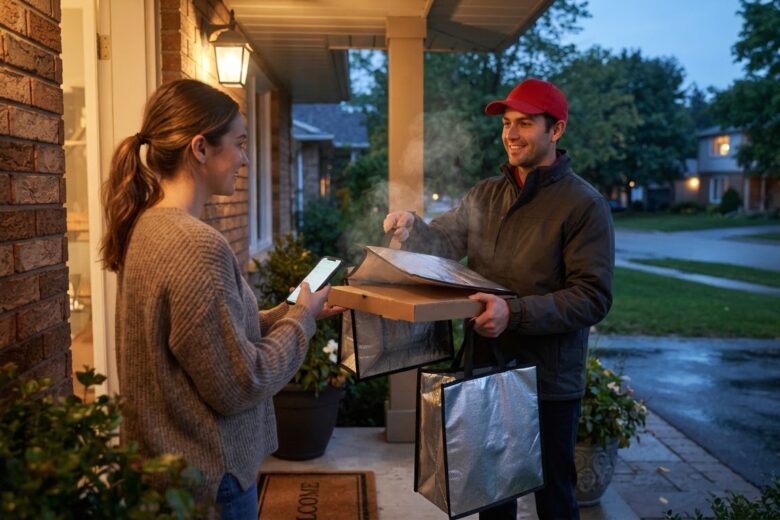
A pizza that arrives twenty minutes late, cheese set into a solid sheet, and lid stuck to the cheese is usually the result of several small decisions made long before the driver pulls up. The oven schedule, the route, the box, and the checkout settings all play a part. Understanding how those pieces fit together lets customers set realistic expectations and recover when something goes wrong.
Searching for pizza delivery tends to surface the same promises: fast, hot, and easy. The reality depends on local conditions, the kitchen’s workload, and the channel used to place the order. Delivery is less a single service than a chain of handoffs, and the weakest link determines what reaches the door.
Anyone ordering from Seaside Pizza Co or any other local kitchen will get a better result by checking a few details before pressing submit. Confirming the address, comparing the total cost rather than the menu price, and choosing the right packaging options can prevent most common complaints. The sections below walk through each stage in order.
Why Delivery Times Vary, and How to Read the Estimate
A quoted delivery time is a forecast built from four variables: kitchen queue, distance, driver batching, and peak demand. The kitchen queue is often the largest. A deck oven or conveyor oven can bake only so many pies at once, and a ticket printed during a Friday rush may wait several minutes before dough reaches the stretch station. Distance adds travel time, but traffic signals, drawbridges, and one-way streets can matter more than miles.
Driver batching adds another layer. Many stores hold an order briefly to group it with another nearby address, which lowers cost per delivery but can add ten minutes. The estimate generally assumes the order will be bundled only if the system predicts it is efficient, so a sudden rush can change the math.
The same address can receive different windows at different times of day because demand is not constant. A 6:00 p.m. order on a weekday may carry a 30 to 45 minute window, while a 9:30 p.m. order on a holiday weekend may stretch further. Coastal and tourist areas show sharp seasonal swings, and salt-air humidity and wind do not change the estimate but do affect how quickly a pie cools in transit.
An estimate is a planning figure, not a guarantee. It cannot account for a driver stopping for a fuel tank or a sudden lane closure. Pickup orders are usually faster because they skip the driver leg entirely. If speed matters more than convenience, picking up a pie that is already boxed and waiting on the counter often beats a delivery quoted at the same time.
Ordering Direct Versus Through Third-Party Apps
Customers can reach the same kitchen through the store’s own website or phone line, or through a third-party marketplace. Each route involves trade-offs rather than a clear winner.
Menu prices are often higher on marketplace apps because restaurants may raise listed prices to offset commission fees. Marketplaces also add a service fee and sometimes a separate delivery fee, which together can add a significant share to the subtotal. Direct orders usually carry a lower total, though the store may still charge a small delivery fee.
Tracking and support also differ. Marketplace apps typically offer live driver location, automated refund flows, and a centralized help desk. Direct orders depend on the store’s own tracking tools, if any, and support may be a phone call during business hours. Customers who value a single point of contact for complaints may prefer the app; those who want fewer intermediaries may prefer the store.
Calling the local store remains the most direct route for large, customized, or time-sensitive orders. A staff member can confirm whether a 20-inch pie with split toppings is feasible, flag a delivery window that the app cannot represent, or arrange a catering drop-off. Phone orders also let customers explain special instructions, such as a gate code or a request to separate the sides, in a way that a checkout field may not capture accurately.
Reading the Fine Print Before You Check Out
Checkout rules determine whether an order is accepted and what it finally costs. Three areas cause the most friction.
Confirming Your Address Is Inside the Delivery Area
Delivery zones are usually defined by drive time or a radius from the store, and they often follow road networks rather than straight-line distance. A house that looks close on a map may sit beyond a river crossing or a highway interchange that breaks the route. Addresses fail at checkout for predictable reasons: missing apartment or unit numbers, newly built developments not yet in the mapping database, rural route designations, and addresses on the boundary of a zone.
Entering the unit number, using the postal address exactly as it appears on mail, and adding a short note about building access reduce failures. For a newly constructed address, calling the store directly is often faster than repeated retries. Customers near a zone edge should test the address before the meal is due, since an accepted address can still be reclassified if the store changes its zone.
Minimum Orders, Fees, and Surcharges
Many stores set a minimum order value for delivery, commonly in the range of $10 to $15 depending on market and time of day. Some apply a delivery fee that scales with distance, while others charge a flat amount. Marketplace apps may add a service fee, a small-order fee for subtotals under the minimum, and in some regions a local tax or regulatory surcharge.
These elements interact. A $12 pizza with a $10 minimum may look compliant, but once a $3 delivery fee, a $2.50 service fee, and tax are added, the total can exceed a larger order with a lower per-item cost. The practical method is to compare the final total at the checkout screen, including tip, rather than the menu price. Checking the same basket through two channels usually reveals the cheaper route quickly.
Tipping Versus Delivery Charges
A delivery charge and a tip are different. The delivery charge is a fee the store or platform sets to cover some of the cost of the delivery operation. Tips go to the driver. Many delivery services state explicitly that the fee is not a gratuity, and drivers typically do not receive the full delivery charge, depending on the employment model.
Tipping customs vary, but a common benchmark is 15 to 20 percent of the subtotal, with a higher amount for bad weather, large orders, or long distances. Cash tips are received directly by the driver, while card tips may be added through the app and paid out later. Customers who want to ensure a driver receives the gratuity should add it in the app or hand it over at the door.
Keeping the Pizza Hot, Intact, and Worth Eating
The quality that reaches the door is the part of delivery that receives the least attention, yet it is the one customers notice most. Heat loss, steam trapped in the box, and moisture migration from toppings are predictable physical processes.
Style matters. Thin crust, cracker-style pies lose structural integrity quickly because their low mass cools fast and their crispness depends on dry surface moisture. Hand-tossed and Neapolitan-style pies with thicker rims often hold texture better over distance. Deep dish retains heat longest because of its dense, oil-rich crust and deep sauce layer, but it can become heavy and greasy if the box traps steam.
Toppings change in transit. Fresh basil and arugula wilt when exposed to residual steam, and they may turn dark where they touch sauce. Mozzarella with high moisture content can release water, and fresh mozzarella in particular may weep into the crust. Shredded low-moisture cheeses hold up better, and greens added after baking can be kept separate and sprinkled on arrival.
Packaging features make a measurable difference:
- Vented boxes release steam and reduce the soggy base that forms when moisture condenses under the lid.
- Separated sides, such as wings in a separate container or dips in a sealed cup, prevent sauce from soaking breadsticks.
- Parchment or a perforated liner between slices helps keep the crust crisp when the box is stacked.
- Insulated bags are useful for distance, but they trap steam if the pie is still releasing moisture. Vented boxes inside the bag are a better combination.
Reheating leftovers requires avoiding the microwave, which turns the crust rubbery. A dry skillet over medium heat, covered for two to three minutes, followed by a brief uncovered finish, restores crust texture. An oven or air fryer at 375 to 400°F for five to eight minutes on a wire rack also works well. Toppings with fresh greens should be added after reheating.
Food safety standards also apply. The FDA Food Code sets 135°F as the minimum hot-holding temperature for prepared foods. Stores that hold pies in heated cabinets or insulated staging areas should follow local health department rules, and staff holding ServSafe certification, a widely recognized food protection credential administered through the National Restaurant Association, are trained in these limits. Customers can reasonably expect a pie to arrive warm to the touch; a cold or lukewarm center after a short drive usually signals a problem with staging or handling.
Handling Late, Missing, or Damaged Orders
When delivery goes wrong, the first step is to check the order before the driver leaves. Confirm the number of pizzas, the sides, and the sauces against the receipt. Look at the box for crushed corners or sauce on the lid, and open it to check that the pie is intact. Photos taken immediately, showing the order number on the receipt alongside the damaged item, provide the strongest evidence when a claim is later reviewed. Keeping the order number and time stamp in the same photo avoids disputes about which order is affected.
Responsibility depends on the issue. Problems with food preparation, such as an incorrect topping or a burned crust, are usually handled by the store. Delivery-specific problems, including a driver marked as delivered who cannot be found, a missing bag, or a late arrival with no communication, are often routed through the delivery platform’s support system. Orders placed directly with the store go to the store, which may offer a remake, a credit, or a partial refund.
Setting expectations for next time improves future results. Delivery instructions should be specific: a gate code, a side door, or a note to call on arrival. For large orders or events, choosing a longer window or scheduling the order in advance avoids peak-hour congestion. Customers who regularly receive cold food from the same route may find that a pickup order, or a shorter menu for delivery, produces a better result.
 Ryan Thorne
