A burst supply line can turn a dry room into an active emergency within minutes. Water travels beneath flooring, wicks into drywall, and reaches electrical systems long before visible damage tells the full story.
A qualified Water Damage Company coordinates the technical response: identifying the source, removing standing water, drying concealed spaces, cleaning affected contents, and repairing damaged finishes. The objective is not simply to make a room look dry, but to return materials to safe moisture levels.
In Denver and throughout Colorado, freeze-thaw conditions, intense storms, aging plumbing, and basement drainage problems can all contribute to losses. Property owners may use Restoration Logistics as one local resource when comparing emergency-response providers, but should still evaluate any contractor’s qualifications, scope, and documentation practices.
What a Water Damage Company Handles
Restoration terms describe different stages of work:
- Mitigation limits further damage through water shutoff, extraction, temporary protection, and drying.
- Cleanup removes water, debris, soil, and surface contamination.
- Remediation addresses hazardous or contaminated conditions, such as sewage exposure or microbial growth.
- Repair replaces damaged components, including drywall, flooring, trim, insulation, and cabinetry.
- Reconstruction restores larger portions of the property, potentially involving framing, electrical, plumbing, and finish work.
Common causes include burst pipes, failed water heaters, appliance supply lines, roof or storm intrusion, sewage backups, basement flooding, and HVAC condensation. Water may affect carpet, hardwood, laminate, tile assemblies, drywall, insulation, cabinets, furniture, contents, subfloors, framing, and structural connections.
Residential projects often involve occupant safety, contents handling, and temporary living arrangements. Commercial restoration adds operational pressures: protecting inventory, isolating affected departments, coordinating with facility managers, maintaining fire-protection access, and completing work without unnecessarily closing the building. A retail store, apartment complex, medical office, or warehouse may require phased extraction and detailed daily reporting.
Immediate Actions Before Professional Help Arrives
Safety comes before property preservation. Evacuate if water is rising, ceilings are sagging, structural movement is visible, fire-protection systems are compromised, or electrical equipment may be submerged. Do not enter standing water if its depth, source, or electrical risk is unknown.
If it can be done without entering water or touching wet equipment, shut off the main water supply. Turn off electricity only from a dry, safe location; never operate breakers while standing in water. Contact emergency services if there is an immediate threat.
Without walking through contaminated water, move dry belongings to a higher level. Place foil or plastic barriers beneath furniture legs where practical, and photograph conditions before moving items. Avoid household vacuums, ordinary shop vacuums, electrical appliances, and portable fans in wet areas. Restoration crews use grounded electrical distribution, appropriately rated equipment, air movers, and dehumidifiers.
For sewage or floodwater, keep people and pets away. Do not handle contaminated contents without suitable protective equipment. Basement flooding deserves particular caution: water may conceal energized circuits, unstable walls, sump-pump hazards, or contaminated groundwater. A plumber, electrician, or restoration professional may need to make the area safe before cleanup begins.
How Professional Water Damage Restoration Works
Inspection and Damage Assessment
Technicians begin by locating the leak source and determining whether it has been stopped. They document affected rooms, materials, contents, and pre-existing conditions, then classify the water by contamination level. A clean supply-line leak differs substantially from gray water containing chemical or biological contaminants, and sewage or rising floodwater requires the most conservative controls.
Moisture mapping uses penetrating and non-penetrating moisture meters, infrared imaging where appropriate, and visual inspection. Readings behind baseboards, beneath flooring, inside wall cavities, and within insulation can reveal damage that a surface inspection misses. The crew should photograph conditions, record measurements, identify materials for removal, and communicate the initial scope.
Extraction, Drying, and Monitoring
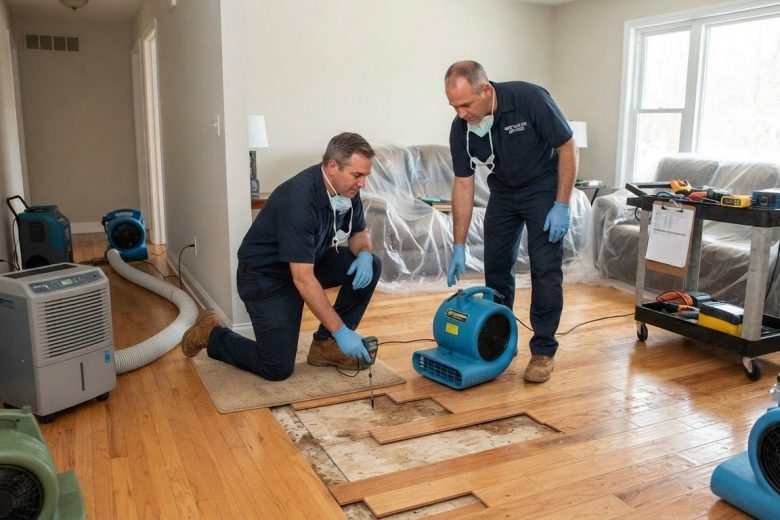
Extraction removes bulk water with truck-mounted or portable extractors, pumps, and specialty tools. Crews then establish an air-drying system using air movers, dehumidifiers, and, when necessary, temporary containment. Commercial losses may require high-capacity desiccant or low-grain refrigerant dehumidification, controlled demolition, and after-hours work to protect operations.
Drying goals are based on unaffected comparison materials, building-material specifications, temperature, humidity, and documented moisture readings. Technicians typically monitor progress daily or more frequently on complex losses. Equipment should be adjusted as conditions change rather than left in place without measurement.
Drying must address wall cavities, subfloors, insulation, carpet padding, cabinets, and structural wood. Rebuilding before those areas meet acceptable targets can trap moisture and lead to swelling, odor, corrosion, deterioration, or microbial growth.
Cleaning, Sanitizing, and Contents Restoration
Cleaning methods depend on the water category and material. Salvageable belongings may be cleaned, dried, deodorized, photographed, inventoried, and stored through a pack-out service. Sensitive contents can require specialized drying, document recovery, electronics evaluation, or off-site processing.
Porous materials saturated by sewage or heavily contaminated floodwater often cannot be reliably restored. Disinfectants must be selected and applied according to label directions, material compatibility, and safety requirements; “sanitizing” is not a substitute for removing unsalvageable materials.
Odor control may involve source removal, cleaning, ventilation, filtration, or specialized treatment. If visible mold, persistent musty odor, or extensive concealed growth is present, a qualified mold assessor or remediation contractor may be appropriate. Mold work should follow a documented containment and clearance strategy rather than relying on fragrance or surface spraying.
Repairs and Reconstruction
After mitigation is complete and drying is verified, the project transitions to repair. This may include replacing drywall, insulation, flooring, underlayment, baseboards, cabinets, doors, paint, and trim. Structural or system damage can require plumbers, electricians, roofers, flooring installers, and general contractors.
A complete restoration also involves coordinating permits, material selections, contents delivery, and insurance documentation. The mitigation scope should remain distinct from reconstruction pricing so the property owner can understand what emergency work was performed and what later improvements or replacements are proposed.
Choosing the Right Restoration Provider
Before authorizing work, verify:
- Emergency availability and service coverage for the property’s location.
- General liability and workers’ compensation insurance.
- Applicable state or local licensing requirements.
- Training in water restoration, health and safety, and contamination controls.
- Relevant credentials, such as IICRC water-restoration training; OSHA compliance is also important for worker safety.
- Experience with the specific loss, whether clean water, gray water, sewage, storm flooding, or commercial damage.
Request a written scope, equipment plan, expected monitoring schedule, estimated timeline, documentation process, and payment terms. Ask who will perform demolition and reconstruction, whether subcontractors are involved, and how changes will be approved.
Independent reviews, complaint histories, references, and communication standards matter. A professional provider should document the source, affected areas, moisture readings, equipment placement, labor, contents, photographs, and completed work for an insurance claim. Documentation supports evaluation; it does not guarantee coverage or payment.
Cost, Insurance, and Questions Homeowners Ask
What Influences Water Damage Restoration Cost?
Published estimates commonly place water mitigation in the broad range of roughly $1,300 to $5,200, but severe losses can cost considerably more. The actual price depends on:
- Water volume and affected square footage.
- Contamination category and required protective controls.
- Accessibility, extraction difficulty, and hidden moisture.
- Material removal, disposal, and controlled demolition.
- Drying duration, equipment quantity, and monitoring.
- Contents inventory, cleaning, storage, and pack-out services.
- Reconstruction of flooring, drywall, cabinets, insulation, or structural components.
Emergency mitigation and later repair are separate cost categories. An on-site inspection is more reliable than an online calculator because assemblies, moisture depth, and contamination cannot be priced accurately from photographs alone.
Is Water Damage Covered by Insurance?
Coverage depends on the water source, policy language, exclusions, maintenance conditions, deductibles, endorsements, and whether flood coverage is required. Sudden accidental plumbing failures may be treated differently from long-term seepage, neglected leaks, sewer backup, or surface flooding.
Photograph and video the loss, preserve damaged materials when safe, prevent additional damage, retain receipts, and notify the insurer promptly. Ask the carrier about emergency mitigation procedures and claim documentation, while remembering that the restoration contractor cannot determine coverage.
When Should Someone Call a Water Damage Company?
Call quickly when water is spreading, flooring or drywall is saturated, sewage is involved, moisture is hidden, a basement is flooding, or suitable extraction and drying equipment is unavailable. Delays can increase structural deterioration, odors, corrosion, and microbial growth.
Do not wait for visible mold. Water can remain behind walls and under floors while the room appears normal.
How Long Does Restoration Take?
Extraction may take hours, but structural drying commonly requires several days. Contents processing, inspections, engineering, permitting, and reconstruction can extend the project to weeks or longer.
Appearance alone does not determine readiness for repairs. Moisture readings, material condition, humidity control, and comparison with unaffected areas establish whether drying is complete. A responsible provider explains these targets, documents them, and updates the scope when concealed damage is discovered.
 Ryan Thorne