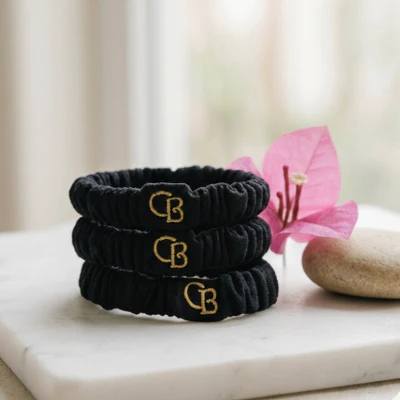
Something is shifting in the way people think about hair accessories. Items once treated as throwaway purchases are getting a second look. Consumers are asking harder questions about what they’re made of and how they hold up across a full day of wear. Those questions are changing what ends up in bathroom drawers and which brands earn repeat purchases.
When Small Accessories Start Creating Big Hair Problems
Constant Contact Changes Everything: The average hair tie sits against the hair for most of the day, which means the material matters more than most people realize. Conventional options built from plastic or synthetic elastic create friction and micro-tears over time. Many people don’t connect the breakage they notice to the accessory they used that morning, but the connection is often direct.
Performance Has to Be Proven, Not Promised: Quality assurance in sustainable beauty means more than passing a basic durability test. It means tracing materials back to their source and checking how a product performs across different hair types. Shoppers are growing more skeptical of vague sustainability claims, and brands that provide specific sourcing details and honest labeling tend to earn stronger, more lasting trust.
The Real Difference Is in the Design
Why the Core Matters as Much as the Cover: One overlooked factor in hair accessory design is tensile strength, or how well a material holds under repeated stretching without degrading. Natural rubber and cotton cores handle this reliably, while cheaper synthetic alternatives tend to lose elasticity fast. A tie that holds its shape over months earns a regular place in the routine rather than ending up discarded.
What Plastic-Free Actually Looks Like in Practice:
Plastic-free isn’t just about removing visible plastic hardware. It means looking at every component, from the outer fabric to the elastic core, and being specific about what each one is made from. The qualities that define a genuinely plastic-free option typically include:
- Outer fabric made from plant-based or upcycled agricultural fibers
- A core of natural rubber or cotton elastic rather than a synthetic band
- No reliance on recycled polyester, which still releases microplastics into waterways
- Grip that holds better with moisture rather than slipping during sweaty wear
The Details That Show Up in Daily Use: A plant-based outer fabric breathes differently than a synthetic one. A natural rubber core stretches without losing memory the way cheap elastic does. None of these choices happen accidentally in a product that performs well across different hair types. They reflect decisions made at the design stage that directly affect what you see in the mirror every morning.
Softness That Actually Holds
What Research Into Plant-Based Textiles Reveals: Advances in plant-based textiles have expanded fabric options for everyday accessories, many sourced from agricultural byproducts that would otherwise go to waste after harvest. Pineapple leaves yield long, durable fibers with natural texture and grip. That material behaves differently on the hair than petroleum-based synthetics, and those differences show up in how the accessory performs across a full day.
Why All-Day Wear Changes the Standard: A well-designed hair accessory should work without constant adjustment for thick, fine, curly, or straight hair. That’s a design challenge that goes beyond choosing a softer material. Accessories that manage it tend to combine fabric weight, stretch ratio, and surface texture to distribute hold evenly and reduce the tension points that cause breakage and visible dents.
The Swap Worth Making
Choosing softer, plastic-free hair accessories shows up in the mirror and in the trash can. Less breakage, fewer creases, and no guilt over tossing another stretched-out plastic band. If you’re ready to make that switch, exploring plastic-free options made from natural materials is a clear place to start treating your hair and your habits better.
Featured Image Source: https://ciaobellacollective.com/cdn/shop/files/Screenshot_2026-04-28_at_3.01.11_PM.png?v=1777416086&width=400
 Ryan Thorne